Morocco surf spots · choose by level and trip style
The best surf spot in Morocco starts with the surfer, not the postcard.
Beginners usually need a sandy beach or gentle bay chosen on the day. Improving surfers need manageable green waves and an easy way in and out. Experienced surfers may aim for Taghazout’s famous points when the waves, wind, and crowd suit them. This guide helps you shortlist an area; always check the real beach before paddling out.
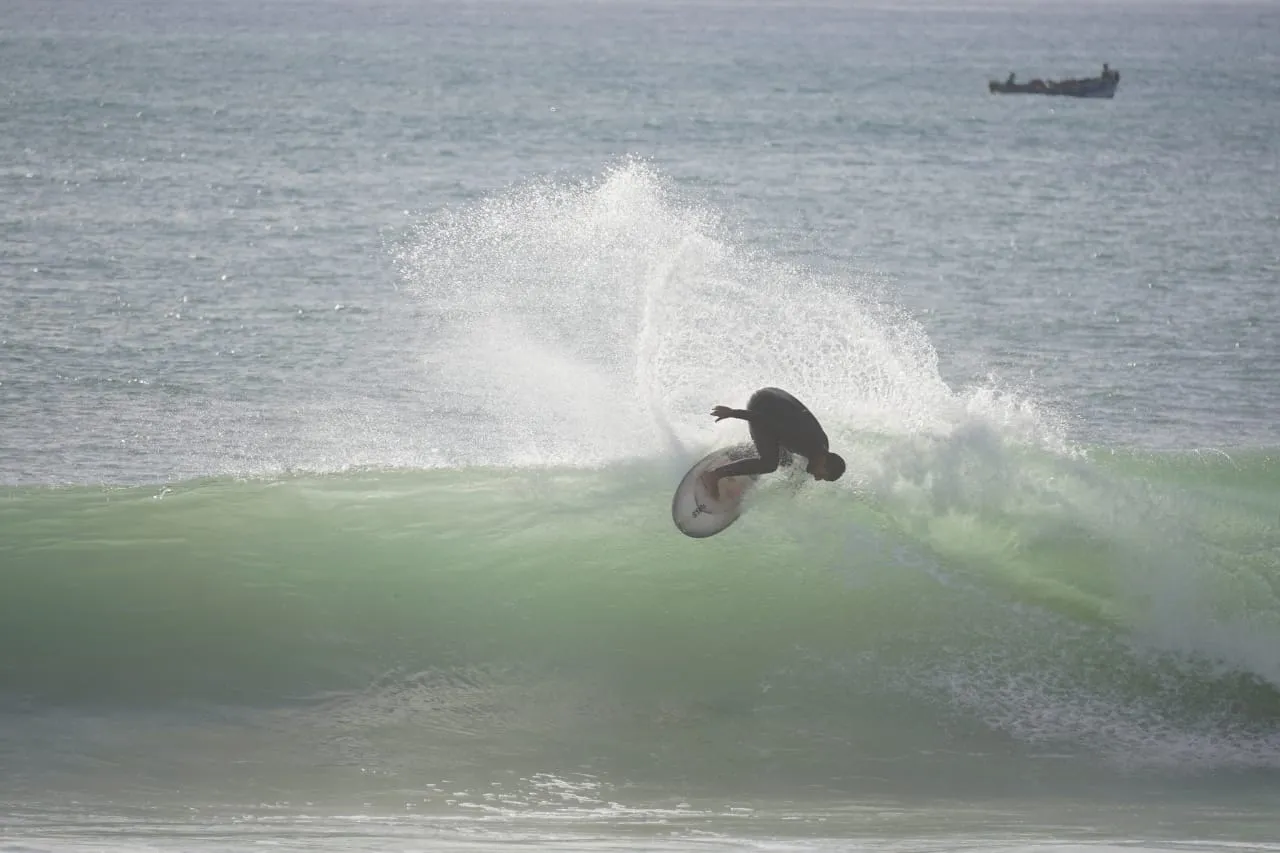
● Our own photo · Coach Jamal on a clean Moroccan wave
Before choosing a beach
Six things matter more than a “best spot” list
A useful choice starts with what is under the water, how much wave energy reaches the beach, the tide, the way in and out, the crowd, and your honest ability that day. The Moroccan National Tourist Office links Anchor Point and Killer Point with experienced surfers, while the wider Taghazout area also has gentler options. A beginner-friendly area can still contain waves meant only for experienced surfers.
What is under the water
Sand is different from rock or reef. The bottom changes how careful the entry and exit need to be.
How much wave energy reaches it
A headland can shelter one beach while the next beach receives much stronger waves.
The best water level
As the tide moves, the same beach can become gentler, faster, shallower, or difficult to enter.
A clear way in and out
A good-looking wave is not useful if you cannot enter, stay in place, and return safely.
How busy it is
A crowded wave can be a poor learning place even when the size looks manageable.
How you feel today
Tired arms, confidence, your board, and recent practice matter more than your best-ever session.
Morocco surf break directory
11 Morocco surf spots with honest level notes
This page stays country-wide, so each spot gets a distinct role. For Taghazout-only tide notes, use the dedicated bay guide.
Taghazout Bay classics
Anchor Point, Killers, La Source, Banana Point, and Panoramas describe one coastline with half a dozen personalities. Expect heavier energy on long-period winter swell and softer training options when coaches pick sand.
Imsouane Bay offers famous length when swell cooperates, while Sidi Kaouki near Essaouira gives beach-break options for travelers pairing surf with medina days. Budget drive time and changing wind fields anytime you roam.
Morocco’s reference right point; world-class mechanical walls, not a beginner proving ground.
Killers
Taghazout
Right point break (cliff/reef)
Intermediate plus
All tides (best low) · NW 4–12ft
Powerful, open-ocean right that holds giant swell; deep water takeoff and long running sections.
La Source & Mysteries
Taghazout
Right & left reef / sand peaks
Improver to intermediate
Mid tide · W/NW 3–6ft
Playful, forgiving walls when tide is rising; great step-up wave from beginner beach breaks.
Hash Point
Taghazout Village
Right point break (sand/rock)
Improver to intermediate
Mid to high tide · W/NW 3–6ft
Mellow right point right in front of the village; easy paddle out and friendly vibe.
Panoramas
Taghazout Bay
Beach break & right point
Beginner to intermediate
Low to mid tide · W/NW 2–5ft
Sheltered sand break with a mellow right-hand point; forgiving white-water and gentle green walls.
Devil's Rock
Tamraght
Beach break & rock wedge
Beginner to intermediate
Low to mid tide · W/NW 2–6ft
Punchy lefts and rights breaking over sand and rock; consistent daily training break on our doorstep.
Banana Point
Aourir / Tamraght
Right point break (sand bottom)
Beginner to intermediate
All tides (best low) · W/NW 3–6ft
Mellow, long-peeling right hander wrapping around the rivermouth; perfect for first angled green waves.
Anza Beach & Point
Anza (Agadir edge)
Left point & beach break
All levels
All tides · Any W/NW swell
The coastline's premier swell magnet; consistent all year, left point break beside 85-million-year-old dinosaur tracks.
Boilers
North Taghazout
Right reef break (heavy)
Advanced
Low to mid tide · NW 4–10ft
Fast, hollow right breaking in front of a shipwreck boiler; sheltered from north winds when other spots blow out.
Imsouane Bay
North Coast (1h)
Right point / bay peeler
Beginner to longboarder
Low to mid tide · NW 4–12ft
Africa’s longest ride (up to 800 metres); ultra-mellow peeling wave that turns heavy winter swell into cruise mode.
Sidi Kaouki
Essaouira Coast
Open Atlantic beach break
Beginner to intermediate
Mid to high tide · W/NW 2–6ft
Wide sandy beach with multiple peaks; uncrowded surf paired with an Essaouira cultural road trip.
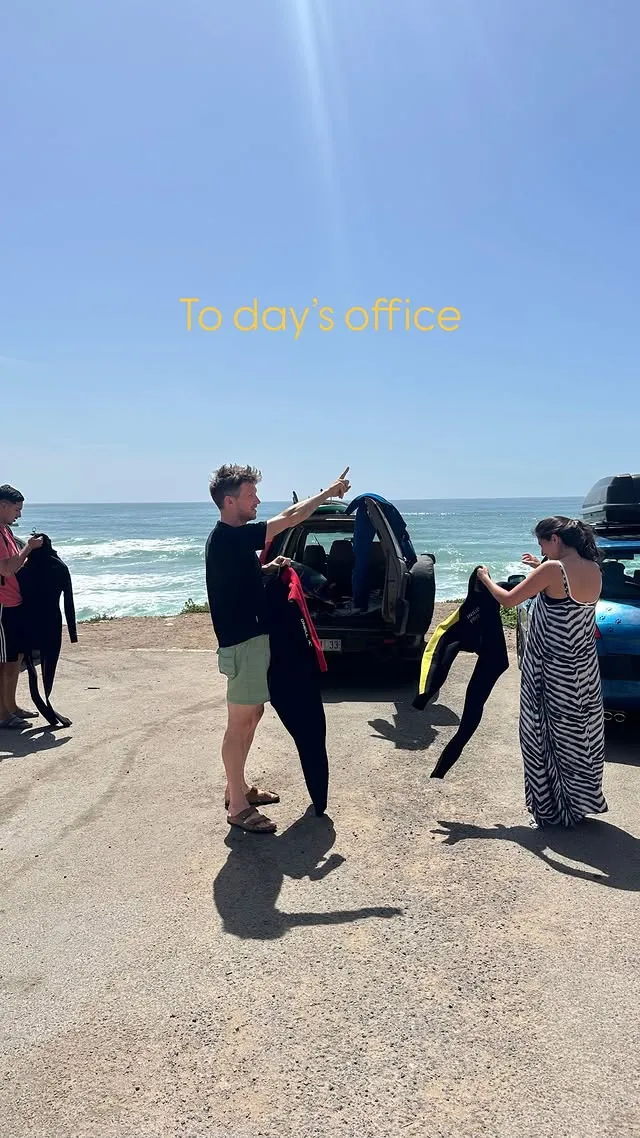
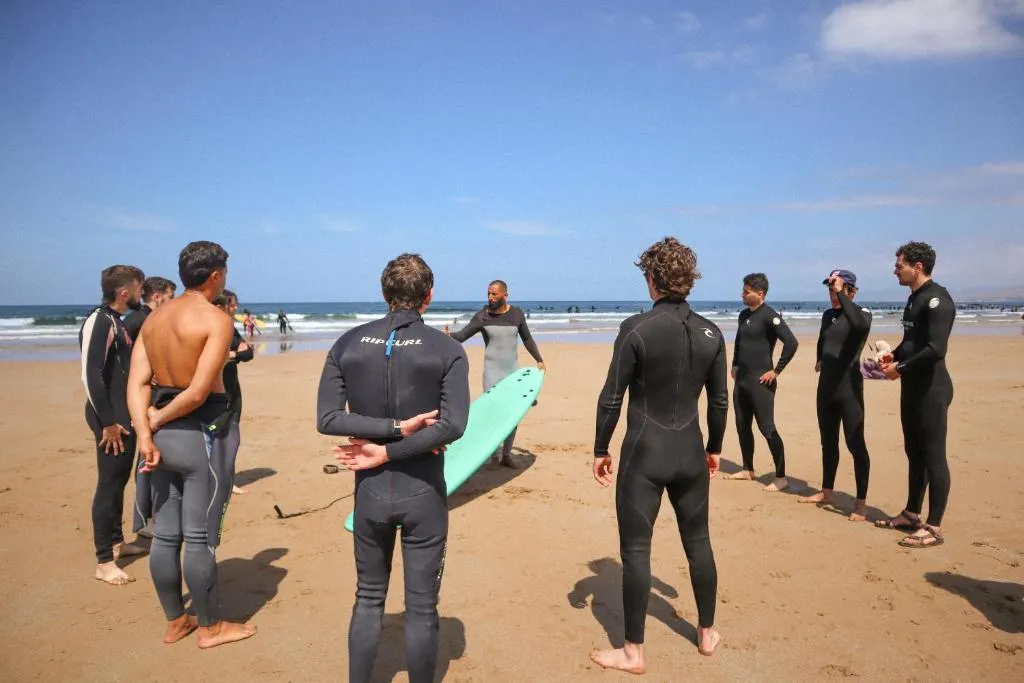
From our own days in Taghazout Bay
A beach can look inviting and still be the wrong choice that morning.
We watch several sets, talk through the entry and exit, and choose for the least experienced person in the group. These are real moments from our own sessions.
First look: watch the beach before getting changedThe plan is explained before anyone entersChoose waves that let the whole group finish well
Spot by spot breakdown
The essential guide to Morocco's marquee surf breaks
The Copernicus ocean forecast helps us track Atlantic groundswells, but tide windows, bottom topography, local wind, and crowd shape each break's personality:
AdvancedLow to Mid TideRight Point BreakNW Groundswell
1. Anchor Point (Taghazout) — The Legendary Moroccan Right
Anchor Point is Morocco’s international icon. When a long-period North Atlantic swell wraps around the headland, it produces a fast, mechanical right-hander that runs for 300 to 500 metres through three distinct sections: the rocky takeoff ledge, the high-speed mid-section, and the inside bowl. Jumping off the rocks requires precise timing between set waves, and current can be punishing. Not a beginner wave under any circumstances.
Bottom: Rock shelves & boulders
Ideal Swell: NW 5–15ft (12–16s)
Ideal Tide: Low to mid (pushing)
Main Hazard: Rock jump entry & heavy sweeps
Coach Jamal tip: Never paddle out on your own if the swell exceeds 6ft unless you have watched at least three set cycles to spot the jump-off lull. To learn more, read our Taghazout surf guide →
Intermediate Plus & AdvancedAll Tides (Best Low)Right Point / ReefNW Swell
2. Killer Point (Taghazout) — Big Swell Arena
Named after killer whales historically spotted from the cliffs, Killers is one of Morocco’s premier big-wave arenas. It holds massive swell without closing out and features a deep-water takeoff leading into fast, powerful walls that can peel for hundreds of metres. The paddle out from the cliff base is long and demanding—reserve plenty of stamina for the return.
Bottom: Deep reef & boulders
Ideal Swell: NW 4–12ft+ (13–18s)
Ideal Tide: Low to mid tide
Main Hazard: Long exhausting paddle & heavy current
Coach Jamal tip: On giant winter days when Anchor Point is packed, Killers spreads the crowd across multiple peaks. Check our guided surf trips for advanced surfers →
Named after the fresh freshwater spring bubbling into the ocean, La Source offers playful right and left peaks breaking over a flat reef bed mixed with sand. When the tide pushes towards mid, it forms punchy, clean shoulders ideal for surfers transitioning from beach breaks to reef waves.
Beginner to IntermediateLow to Mid TideBeach Break & Gentle PointW / NW Swell
4. Panoramas & Hash Point (Taghazout Bay) — Friendly Village Waves
Panoramas sits right at the southern entrance of Taghazout, offering a sheltered sandy beach break alongside a gentle right-hand point. It is forgiving, easy to paddle out to, and offers both soft whitewater for beginners and clean green faces for improvers. Hash Point sits directly in Taghazout village, providing a mellow right point when swell size is moderate.
Beginner to IntermediateLow to Mid TideBeach Break & Rock WedgeW / NW Swell
5. Devil's Rock (Tamraght) — The Daily Training Arena
Located directly in front of Tamraght, Devil’s Rock is our home coaching arena. A prominent rocky outcrop anchors sandbanks that produce punchy lefts and playful rights. On smaller days, the gentle inside whitewater is perfect for first pop-ups; on moderate winter swells, the outside peaks offer clean green faces for trimming and cutbacks.
Bottom: Sand bottom with rock outcrop
Ideal Swell: W/NW 2–6ft (10–14s)
Ideal Tide: Low to mid tide
Main Hazard: Rocks near the outcrop at high tide
Coach Jamal tip: Walk down from our Tamraght lodge in 5 minutes. Book our small-group surf lessons in Morocco →
Beginner to IntermediateAll Tides (Best Low)Right Point BreakW / NW Swell
6. Banana Point (Aourir / Tamraght) — Long, Gentle Green Waves
Named after the banana plantations of Aourir, this right-hand point wraps smoothly around the rivermouth over a forgiving sand bed. With no heavy rock ledges to jump off and an easy paddle from the beach, Banana Point is the premier destination for improvers learning to drop into unbroken green waves and set an angle.
Bottom: Pure sand bottom at rivermouth
Ideal Swell: W/NW 3–6ft (11–15s)
Ideal Tide: Low to incoming mid tide
Main Hazard: Current sweeping toward beach on big days
Coach Jamal tip: Great wave for learning to ride down the line without stress. Check our beginner surf camp week →
All Levels (Beginner to Advanced)All TidesLeft Point & Beach BreakAny W / NW Swell
7. Anza (Agadir Coast) — The All-Tide Swell Magnet
Anza is the local secret that keeps everyone surfing when Taghazout is flat. Because the beach faces directly into incoming Atlantic swells without headland shadowing, it picks up 1 to 2 feet more wave height than the northern bays. It features a fast, hollow left-hand point break over flat rock for advanced surfers, alongside forgiving sand peaks for beginners. Famous for fossilized Cretaceous dinosaur tracks visible at low tide.
Bottom: Sand beach & flat rock left point
Ideal Swell: Any W/NW swell (works on 1–8ft)
Ideal Tide: All tides (point is best low-mid)
Main Hazard: Rocks on the far inside left point
Coach Jamal tip: When Taghazout looks tiny, drive 10 minutes south to Anza. Read our dedicated Anza spot guide →
AdvancedLow to Mid TideHeavy Right Reef BreakNW Swell
8. Boilers (North Taghazout) — Wind-Sheltered Power Reef
Named after the rusting boiler of a sunken steamship visible in the lineup, Boilers is one of Morocco’s fastest, most hollow right-hand reef breaks. Positioned below a towering headland, it stays clean and offshore even when strong northerly winds blow out other breaks. Heavy takeoff over shallow sea-urchin reef; requires confidence and precision.
Bottom: Shallow reef with sea urchins
Ideal Swell: NW 4–10ft (12–16s)
Ideal Tide: Low to mid tide
Main Hazard: Urchin-covered reef & boiler obstacle
Coach Jamal tip: Only for experienced surfers with solid barrel-riding skills. Jump off behind the boiler with care.
Beginner to Longboarder / IntermediateLow TideAfrica’s Longest Right PointNW Swell
9. Imsouane Bay & Cathedral — Africa's Longest Wave
A scenic 1-hour coastal drive north of Taghazout brings you to the magical fishing port of Imsouane. The Bay offers a world-famous peeling right-hander that can connect for over 800 metres on low tide, making it a bucket-list wave for longboarders, cruisers, and beginners. On the other side of the headland, Cathedral Point offers punchier beach and reef peaks when the Bay is too small.
Bottom: Smooth sand bed in The Bay; reef at Cathedral
Ideal Swell: NW 4–12ft (12–17s)
Ideal Tide: Low to pushing mid tide
Main Hazard: High-tide backwash off the jetty wall
Coach Jamal tip: Bring a longboard or high-volume mid-length to glide through flatter sections. Read our complete Imsouane surf guide →
Beginner to IntermediateMid to High TideOpen Beach BreakW / NW Swell
Situated 2.5 hours north of Taghazout near Essaouira, Sidi Kaouki is a wild, bohemian beach break known for uncrowded peaks, camel rides on the dunes, and breezy Atlantic vibes. Multiple shifting peaks break over sandbars, offering fun walls when winds stay light.
Bottom: Wide sandy beach with scattered rocks
Ideal Swell: W/NW 2–6ft (10–13s)
Ideal Tide: Mid to high tide
Main Hazard: Strong afternoon north winds (trade winds)
Coach Jamal tip: Best surfed in the early morning before the famous Essaouira trade winds pick up.
Morocco Surf Club field note: Coach Jamal selects our coaching spot every single morning at dawn based on live wind, tide, and swell readings—ensuring you surf where conditions match your ability, rather than being locked into one beach.
Decision table
Start with the surfer, then choose the break
Surfer or trip
Start the search here
Avoid assuming
Best next guide
Complete beginner
Coach-selected sand in Taghazout Bay
That a named “beginner” break stays easy at every tide
NOAA’s National Weather Service rip-current guidance explains that strong currents can form where sandbars have gaps or beside structures, and that wave size, wave energy, tide, and the shape of the beach can increase current strength. The physics applies beyond US beaches even though local alerts and emergency services differ.
Watch several complete set cycles and identify where water and surfers move.
Locate a controlled entry, a separate exit if needed, and hazards between them.
Ask a local lifeguard, coach, or experienced surfer about today’s tide and currents.
Choose a board, part of the beach, and session length that leave enough energy for the way back in.
Do not enter alone; if in doubt, stay out and choose a more protected alternative.
For coached sessions, the International Surfing Association sets a pathway that includes practical instruction and lifesaving or surf-rescue requirements. Ask any provider who will lead the session, what rescue qualification is current, and how the day’s break was selected.
Hire locally, minimise the road trip, and surf politely
Many breaks sit beside fishing villages. Keep volume low at dawn, carry trash out, and defer to residents who surf these waves between work shifts. Paying local drivers and instructors keeps money in the towns that host visitors. Group breaks by region instead of driving between distant names for a marginal forecast advantage, and never block access lanes or fishing activity.
Straight answers before you book
FAQ
Tap a question — same wording we confirm by email before you book.
Which Moroccan break is best for first-timers?
Beginners often train at coach-selected sand-bottom areas near Taghazout Bay, including Panoramas or suitable Banana Point sections, when the day's depth, current, tide, shorebreak, and crowd align. Imsouane Bay can also offer learner-friendly days, but no named break is permanently easy and the drive should not replace a local backup plan.
Where should an intermediate surfer head in Morocco?
La Source and Killers near Taghazout reward improving surfers who want shorter, punchier right-hand walls than Anchor Point, and Banana Point stays useful when the swell is mellow. Imsouane Bay gives long cruising rides, and Sidi Kaouki near Essaouira offers sand-bottom variety for honing turns away from the points.
Is Anchor Point too hard for most surfers?
For most visitors, yes. Anchor Point is Morocco’s famous long right with fast takeoffs, rotating lineup position, and a strong paddling current on bigger days. Crowds are heavy and local surfers know the rotation. Ride it only when you are confident on long fast rights, or book a session with a coach who can judge whether you are ready.
Do I need a guide to surf in Morocco?
You can rent a car and explore, but a coach or camp helps with spot selection, tide timing, and lineup etiquette on unfamiliar breaks. Conditions change fast between Taghazout, Anza and Imsouane, and knowing which break suits your level — and when — is the difference between a good trip and a frustrating one.
Are Moroccan surf breaks crowded?
Famous points like Anchor Point are busy in season, and mornings draw the most visiting surfers. Beach breaks such as Panoramas and Sidi Kaouki spread the crowd across peaks, and smaller windows like Banana Point quiet down on mellow swells. Dawn sessions and weekday weeks are the practical way to dodge the lineup.
Another reason to come back.
Next step
Rather have coaches pick the spot each morning?
Our camp week rotates through the bay based on real conditions — not brochure photos.
Prices, inclusions, group size, operating history, and coach records come from Morocco Surf Club and describe our own service, not an outside review. We check safety, destination, and travel details against the official links below. You can ask to see the available coach records before payment while we work on a public verification link.
Last checked and updated . Conditions, transport, and entry rules can change, so confirm the latest details before travelling or paddling out.