Morocco surf seasons · simple month-by-month guide
The best time to surf Morocco depends on the waves you want.
Experienced surfers usually choose October to March for stronger, more regular Atlantic waves. First-timers often enjoy September–October or March–May, when there are more chances of manageable surf and warm days. No month guarantees perfect waves, so we still choose the beach each morning.
Answer at a glance
Choose the season that matches your outcome
| Primary goal | Planning window | Why it can fit | Main uncertainty |
|---|---|---|---|
| First surf week | March–May or September–October | More chances to combine manageable energy with useful coaching repetitions | No month guarantees small surf; protected sand is still selected daily |
| Intermediate progression | October–November or February–April | More chances of long green waves without choosing only the strongest winter months | Long-period pulses and crowds can raise the consequence quickly |
| Powerful right points | November–February | The broad winter pattern gives the best odds of substantial North Atlantic energy | Not every day is clean, and many sessions require advanced ability |
| Surf plus warm-weather holiday | June–August | Smaller-wave expectations can suit a mixed itinerary | Classic points may be inconsistent and afternoon wind can reduce quality |
What the season means in real life
Choose the kind of week you want—not the biggest forecast number.
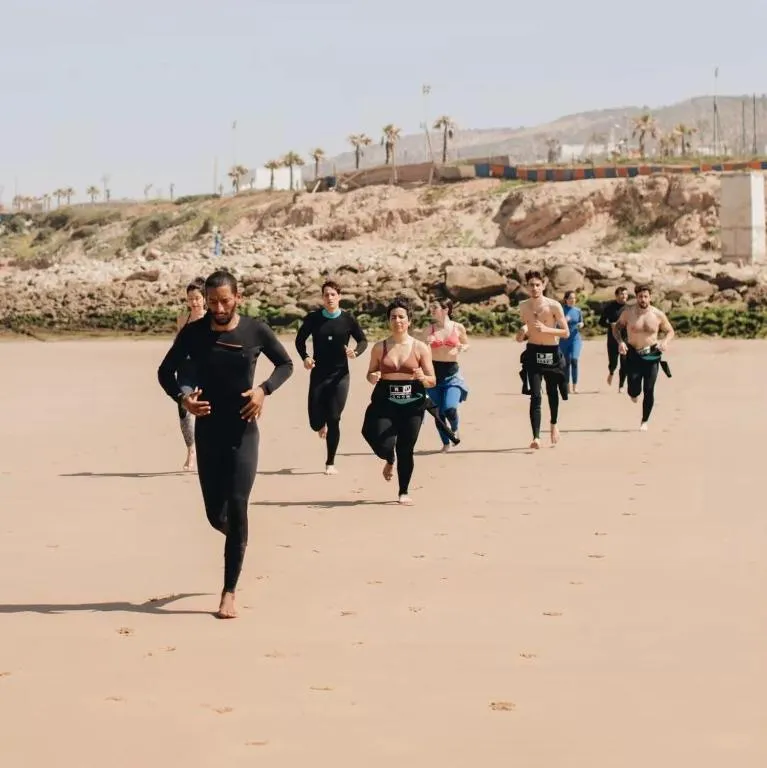
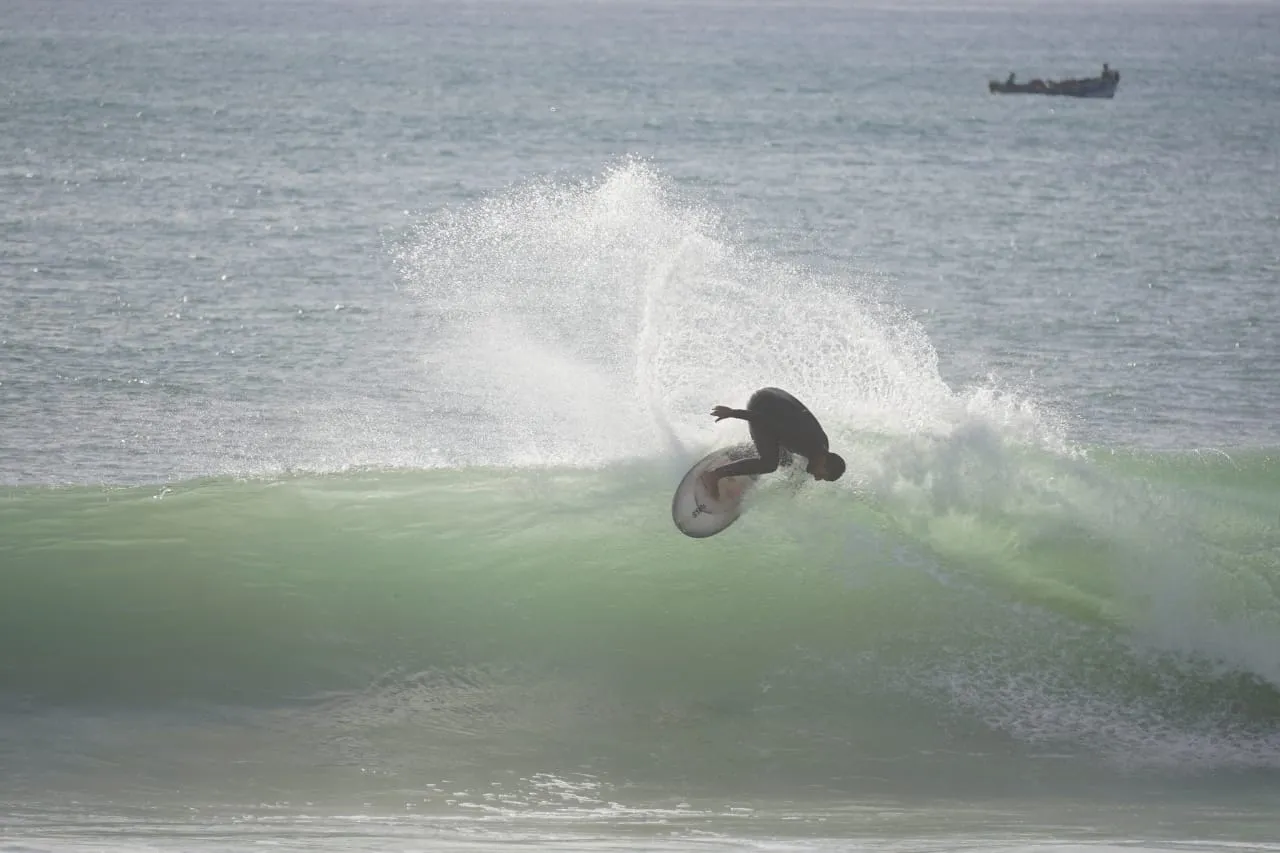
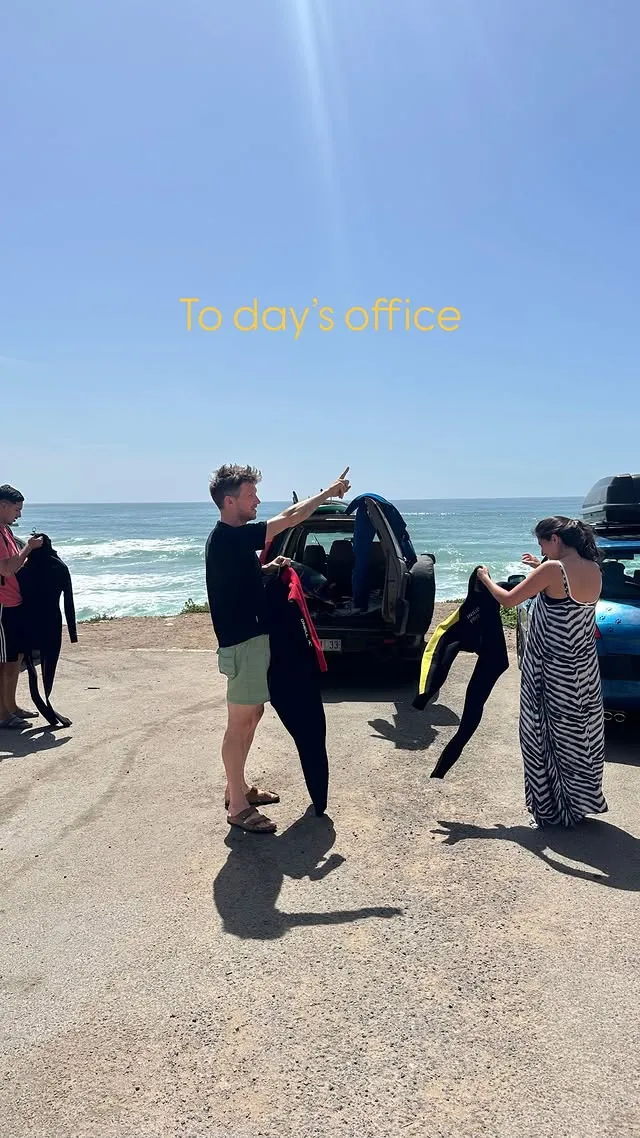
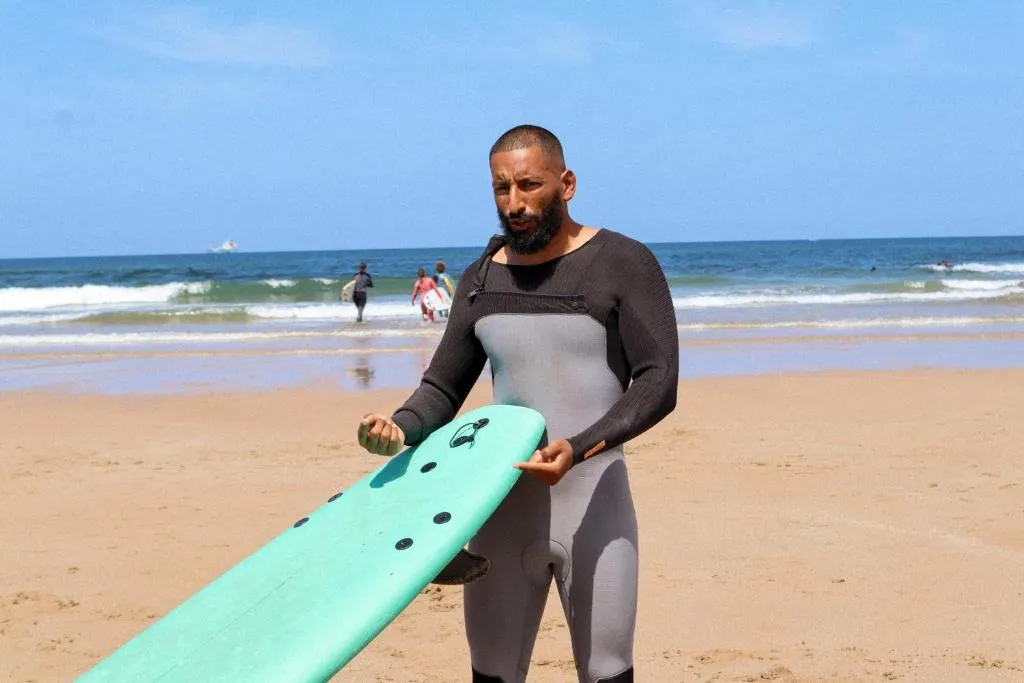
A useful week might mean gentle repetition, clean green waves, or enough power for the points. These photographs come from our own sessions in the bay.
What changes the waves
Six things that can make two surf days feel completely different
A forecast is a useful first look, but it cannot show exactly how one beach will break. We compare the waves at sea with the wind, water level, shape of the coast, and the people who are actually surfing that day.
1. How much wave energy arrives
The number on an app is measured away from shore. The breaking wave at your beach can be smaller or much bigger.
2. How far apart the waves are
More time between waves often means more power when they finally reach the coast.
3. The angle they arrive from
One headland can shelter a beach while the next beach receives the full force.
4. The wind near the beach
Calmer morning wind can keep the surface cleaner and make taking off easier.
5. The water level
As the tide rises or falls, a beach can become gentler, faster, harder to enter, or unsuitable.
6. How you feel that day
Confidence, tired arms, board choice, and recent practice matter as much as the forecast.
We use the Copernicus ocean forecast and a local tide source, then check the actual beach before anyone enters the water.
Morocco surf season · month-by-month data
When to surf Morocco: month-by-month wave & climate breakdown
Morocco offers surfable waves 365 days a year, but the wave size, swell period, water temperature, and prevailing wind shift dramatically across the calendar. The data below synthesizes local surf logs with Copernicus ocean forecasts across Taghazout Bay and the wider Souss-Massa coastline.
| Month | Water °C | Air °C | Wetsuit | Swell & Period | Wind Patterns | Regional Nuance (Anza / Taghazout / Imsouane) | Best Level |
|---|---|---|---|---|---|---|---|
| January | 17–18°C | 19–21°C | 4/3 or 3/2mm | NW 5–10ft (12–16s) | Light offshore morning; light NW afternoon | Marquee right points (Anchor, Killers) fire; beginners need protected sand at Panoramas or Tamraght Beach | Intermediates & Advanced; Beginners on protected sand |
| February | 17–18°C | 20–22°C | 4/3 or 3/2mm | NW 4–9ft (11–15s) | Clean morning glass; light trade winds | Consistent groundswells wrap into Taghazout points; Imsouane Bay creates endless longboard peelers | Intermediates & Step-up learners |
| March | 18°C | 21–23°C | 3/2mm | W/NW 3–7ft (10–14s) | Variable morning glass; light thermal breeze | Spring transition: strong swells still arrive but with softer edges; Banana Point & Devil's Rock shine | All levels; ideal for improvers |
| April | 18–19°C | 22–25°C | 3/2mm | W/NW 3–6ft (9–12s) | Long morning calm; afternoon sea breeze | Warmer air, softer crowds; Tamraght beach breaks offer gentle green-wave repetitions for beginners | First-timers & improvers |
| May | 19°C | 23–26°C | 3/2mm or spring suit | W/NW 2–5ft (8–11s) | Light morning breeze; afternoon onshore | Points slow down; Anza acts as a swell magnet, delivering consistent waist-to-chest waves when Taghazout is small | Beginners & relaxed surfers |
| June | 19–20°C | 24–28°C | Spring suit / 2mm | W/NW 2–4ft (7–10s) | Morning windows essential before trade winds | Classic points dormant; beach breaks in Anza and exposed sandbars provide fun summer foamie sessions | Surf-and-sun travelers |
| July | 20–21°C | 26–30°C | Shorty / boardshorts | W/NW 1–3ft (7–9s) | Early dawn patrol windows before afternoon wind | Smallest swell window; Anza lefts and southern beaches produce mellow practice waves in warm water | First-timers & holiday surfers |
| August | 20–21°C | 26–30°C | Shorty / 2mm | W/NW 2–4ft (8–10s) | Thermal sea breeze; early mornings glassy | Early autumn forerunner swells begin to touch exposed beaches; Anza and Devil's Rock hold shape best | Beginners & surf trippers |
| September | 20–21°C | 25–28°C | 3/2mm | NW 3–6ft (10–13s) | Extended morning offshore windows | North Atlantic storm track reactivates; warm water plus building groundswell make this a top secret month | All levels; excellent improver month |
| October | 19–20°C | 24–27°C | 3/2mm | NW 4–8ft (11–14s) | Stable offshore mornings; light afternoon winds | Prime season begins; point breaks reawaken, water remains warm, and crowds are manageable | All levels (best all-round month) |
| November | 18–19°C | 22–24°C | 3/2mm | NW 5–9ft (12–15s) | Crisp morning offshore breezes | Consistent powerful winter swells; Anchor Point and Killers break regularly; beach breaks offer heavy power | Intermediates & advanced |
| December | 17–18°C | 20–22°C | 4/3 or 3/2mm | NW 6–12ft (12–17s) | Clean morning offshore; occasional rain squall | Peak winter juice; marquee points are in full season; high demand over European holiday windows | Competent surfers & coached groups |
Regional wave physics
Why Taghazout, Tamraght, Anza, and Imsouane react differently to the same swell
One of the biggest mistakes surf travelers make is assuming the whole Moroccan coastline breaks the same way. A 1.5-metre forecast at 14 seconds will produce radically different sessions depending on which beach you stand on:
Taghazout: point break capital (needs solid NW swell)
Taghazout's legendary points—Anchor Point, Killers, La Source—are world-class, but they need solid North Atlantic groundswells (at least 1.5m at 12s+) to wrap around the headlands. When the swell is too small or arrives from a straight west angle, the points sleep.
Anza: the open-ocean swell magnet (works all year)
Positioned just north of Agadir, Anza faces directly into incoming Atlantic swell without requiring a headland wrap. When Taghazout is flat or knee-high in late spring and summer, Anza regularly delivers chest-to-head-high waves with an all-tide left point and beach break.
Tamraght: versatile sand & reef transition zone
Tamraght (home to Devil's Rock, Banana Point, and Crocro) sits in the sweet spot between Taghazout's heavy points and Anza's open power. It offers forgiving sand peaks for coaching and playful right-hand peeling waves that absorb mid-period swells cleanly.
Imsouane: Africa's longest peeling right hander
Situated 1 hour north of Taghazout, Imsouane Bay bends massive winter swells into smooth, slow-peeling rights that can run up to 800 metres on mid-to-low tide. When winter surf is too heavy and closeout-prone in Taghazout, Imsouane turns that energy into longboarding paradise.
Season profiles
How Taghazout Bay changes through the year
October to March: stronger Atlantic waves
This is the broad window for more frequent Atlantic energy and the famous right points. It also brings greater consequence, more competition for waves, and a stronger need for conservative spot selection.
April–May and September: gentler shoulder months
Transition months can offer useful training surf with less peak-winter intensity. They are often our first suggestion for beginners who value repetition over maximum size.
June to August: warmer days and smaller waves
Summer can still produce surf, especially at exposed beaches, but classic Taghazout point consistency is a weaker assumption. Build a mixed itinerary and preserve flexibility.
Morocco Surf Club field note: around Tamraght, we often protect beginner progression by changing the break or the session time rather than forcing a planned point. This is a coaching observation, not a statistical seasonal guarantee.
Before you paddle out
Check the waves before your trip—and again at the beach
- Seven days out: use the forecast to understand whether waves are building or fading, not to choose one exact beach.
- Two to three days out: compare updated swell direction, period, local wind, and the relevant tide window.
- The evening before: prepare one preferred break and at least one more protected alternative.
- At the beach: watch several sets, identify currents and exits, and downgrade the plan if the reality exceeds the group.
NOAA’s rip-current guidance explains that waves can carry more force than they appear to from the beach. A small number on an app or a sunny sky never means the water is automatically safe.
Beginners: choose mentorship before maximum swell
If you are still building a consistent pop-up, choose a coached week with access to protected sand rather than hunting a famous winter point. A good beginner window is the one that produces safe, repeatable practice for your actual ability. Read our beginner camp progression and compare our small-group surf lessons in Morocco before booking.
Straight answers before you book
FAQ
Tap a question — same wording we confirm by email before you book.
When is Morocco's biggest surf season?
Autumn through winter brings the most consistent swell to Taghazout Bay, with larger sessions on many point breaks when the Atlantic wakes up. October is often the best all-round month: reliable ground swell without the hardest winter power. November to February deliver the biggest sets, while spring softens into smaller, friendlier windows.
Is spring good for learning?
Yes. Spring often mixes smaller swell with warmer air and quieter lineups, which many beginners prefer for technique days. Water sits around 18–19°C, a 3/2 wetsuit is enough, and sand breaks like Panoramas stay coachable. If your goal is a first week of pop-ups and small green waves, spring is a forgiving booking window.
What about summer?
Summer can be smaller and more unpredictable for the classic Taghazout points, because the Atlantic settles and afternoon wind appears more often. Sand breaks can still offer fun, coachable days on the right forecast, and crowds thin out. Travelers who book summer should keep flexible expectations and pair surf with beach days and trips.
Is winter too big for beginners?
Not automatically, but it needs a coach. Winter brings the most powerful swell, and point breaks like Anchor Point get serious. Beginner groups avoid those sessions and train on protected sand breaks chosen for the tide and wind each morning. If you want bigger waves and already surf, winter is the season; if you are learning, pick your week carefully.
What is the water temperature in Morocco?
Along the Agadir coast, water stays roughly 17–21°C year-round: coolest around 17–18°C in January and February, warmest at 20–21°C in July and August. That means a 3/2 wetsuit works for most of the year, with a spring suit or shorty in high summer and a 4/3 for the coldest winter mornings.
When are Taghazout breaks the most crowded?
Autumn through spring brings both the best swell and the most visiting surfers, so mornings are busy at famous points like Anchor Point. Summer is quieter in the water but busier on the beaches. Weekday mornings with a dawn start are consistently the least crowded window across the season.
Next step
Find your time for the coast.
Tell us your month. We translate historical patterns into a realistic day-by-day coaching plan.
- Quote before deposit
- Max 5 surfers / week
- Anza · Tamraght · Taghazout bases
Where the information comes from
How this page was checked
Prices, inclusions, group size, operating history, and coach records come from Morocco Surf Club and describe our own service, not an outside review. We check safety, destination, and travel details against the official links below. You can ask to see the available coach records before payment while we work on a public verification link.
Last checked and updated . Conditions, transport, and entry rules can change, so confirm the latest details before travelling or paddling out.
- Agadir–Taghazout beach and surf overview Moroccan National Tourist Office
- ISA coaching and water-safety standards International Surfing Association
- Surfing safety checklist Royal National Lifeboat Institution